
Opus Plasma™
Love Laser? Try Plasma. A one-of-a-kind skin renewal treatment using Fractional Plasma™ technology. Book NowWhat is Skin Resurfacing?
Skin resurfacing, most commonly using a laser, is the most dramatic nonsurgical procedure to repair and renew the skin to address a wide range of skin concerns, such as:
- Fine lines and wrinkles
- Acne and acne scars
- Hyperpigmentation
- Surgical scars
- Stretch marks
Fractional-based skin resurfacing is the modern skin resurfacing method that involves creating a pattern of microscopic injuries to a fraction of the skin. This stimulates a natural wound-healing response exciting the skin to repair itself. The type of injury can vary depending on the type of fractional-based skin resurfacing technology used.
CURRENT PROMOTIONS
Buy 1 Full Face Session,
Get Your Second One FREE
(OR get 25% off a bundle of 3 treatments)
Why Opus Plasma™?
Opus Plasma builds upon the popular and widely accepted science of fractional skin resurfacing and advances this field forward with an option that improves the patient experience using a novel, new energy source – Plasma. With Opus Plasma you can enjoy fractional skin resurfacing results with much less downtime than traditional methods such as the CO2 laser, Fraxel, and microneedling.
Opus Plasma is also the first fractional skin resurfacing method that can work effectively with darker skin types. The technology used does not have the same limitations of traditional laser resurfacing, which means the whole range of skin tones can be treated!
What Areas Can Be Treated With Opus?
Opus is effective on all areas of the face, as well as neck, breast, stretch marks, decolletage, hands, scars and skin defects.
What Should I Expect?
Opus Plasma is a quick, 15-minute outpatient treatment usually performed following application of a topical anesthetic. During your consultation your practitioner will assess your skin to personalize the best treatment plan for you. While you’ll begin to enjoy noticeable improvements following your first treatment, 2 to 3 treatments may be recommended for optimal results.
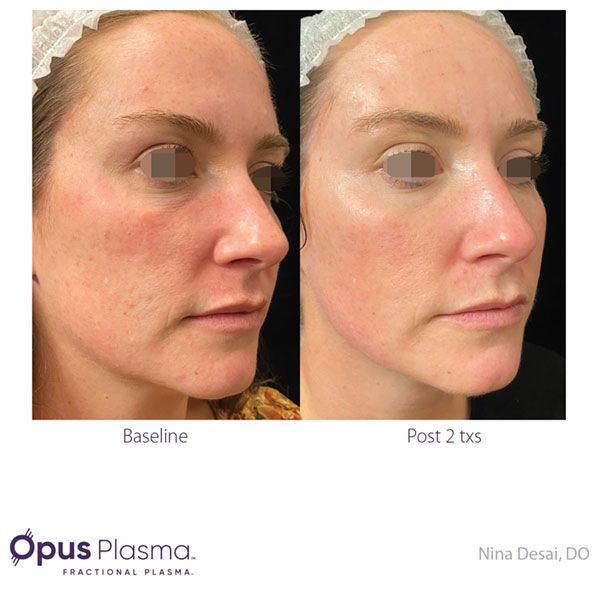
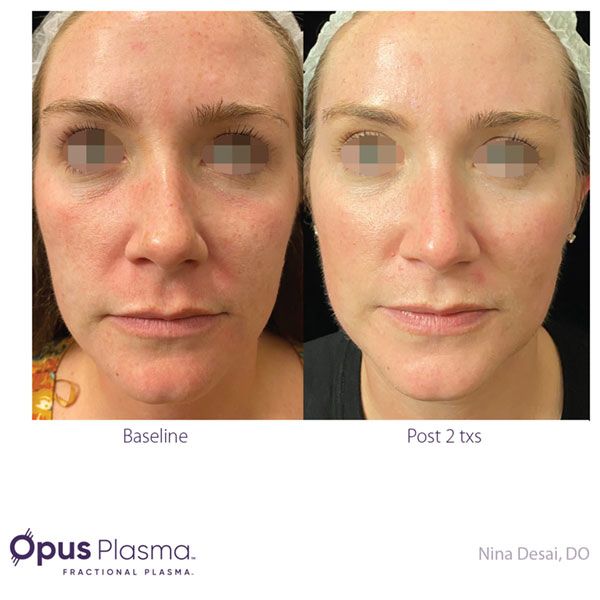
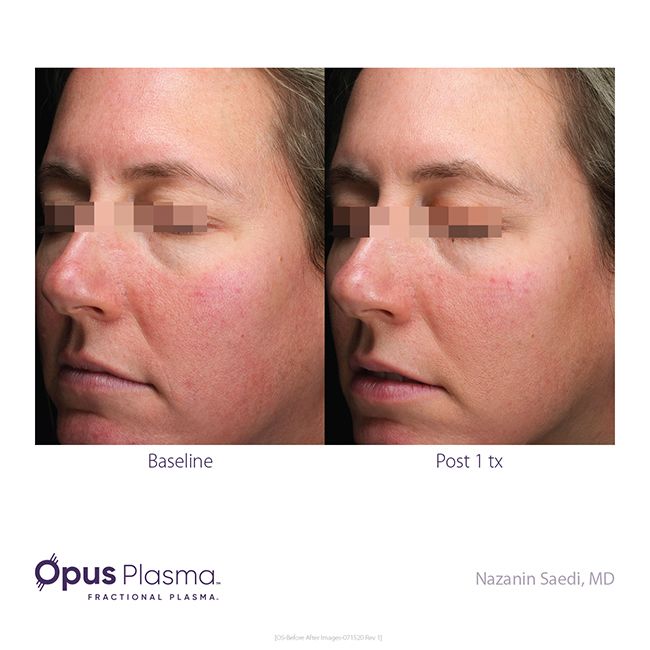
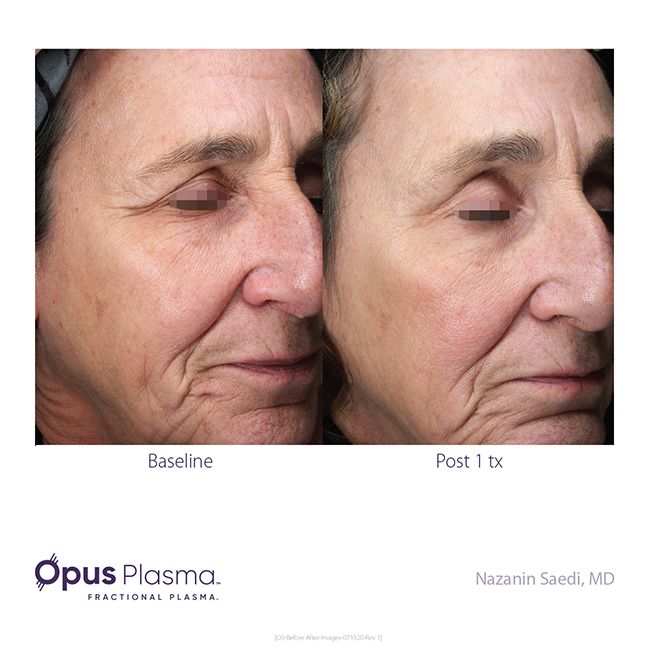


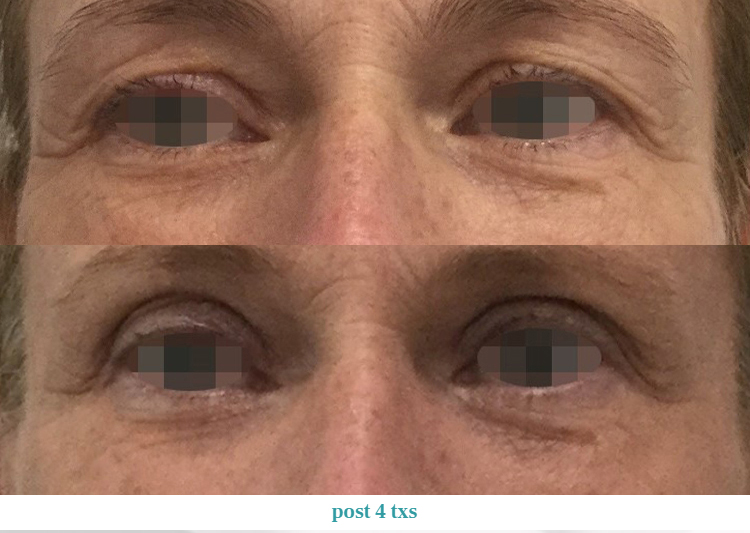
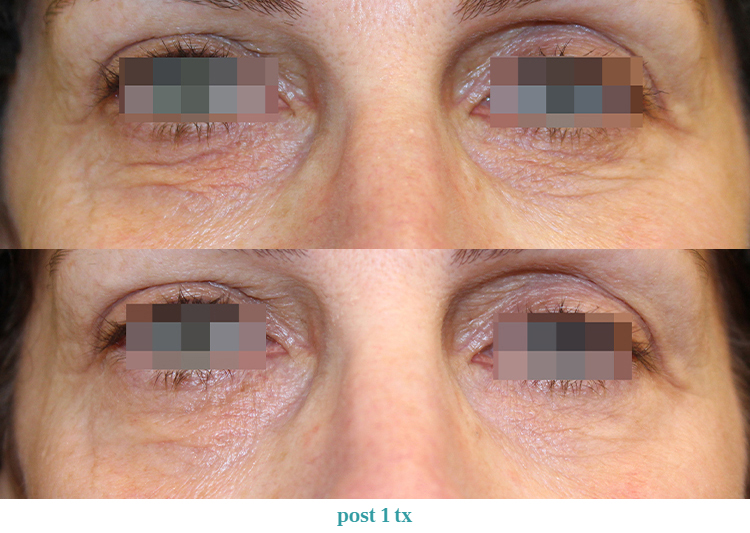
Eyelid and Undereye Results
Is the Treatment Painful?
Depending on your treatment plan, the degree of discomfort will vary. Topical anesthetic may be recommended by your practitioner to numb the treatment area prior to the treatment to minimize any discomfort.
What Does Recovery Look Like?
This too will depend on the treatment plan recommended by your practitioner. A clinical study has shown that Opus Plasma required 50% less downtime when compared to a fractional skin resurfacing technology using a laser. When using moderate settings, the downtime is minimal. You may experience 24 to 48 hours of mild to moderate redness and swelling – not significant to interfere with your daily activities.
Who is Good Candidate for Opus Plasma™?
Opus Plasma was developed to be a versatile tool for your practitioner to address a wide demographic of patients of different age groups, skin types and skin concerns. Your practitioner can dial the energy up or down to personalize the right treatment plan for your needs.
Book Your Appointment Online:
Call us at 613-749-4668 or book online: